
Searching Ohio County Civil Dockets
WVPASS is the public route for available Ohio County Circuit Court documents. Registration is free. Once signed up, you can search by party name, case number, and other filters, with coverage reaching back to July 1, 1999. Searching costs nothing. Viewing or downloading a document runs $0.25 per page plus card processing.
A Magistrate Court civil dispute runs through the free Magistrate Record Search instead, with the local clerk supplying the documents. Family Court files can carry special limits. No result is common. Call the Circuit Clerk front office at 304-234-3611 or the file room at 304-234-3613, visit the fourth floor at 1500 Chapline Street, or mail a specific request. Name the court, the case number, the case style, the document, and the date range.
- Select Circuit, Magistrate, or Family Court based on the claim.
- Search with the exact case number when available.
- Compare names, filing date, case type, and court.
- Read the newest setting, order, judgment, or satisfaction entry.
- Ask the record custodian for a plain or certified copy.
Ohio County Civil Court Boundaries
Money alone will not pick the court. The Ohio County Circuit Court takes civil actions at law over $7,500, along with equity cases, extraordinary writs, and appeals. Magistrate Court handles civil disputes of $10,000 or less. The overlap is real. Jurisdiction turns on the kind of action and the governing law, not a single dollar test. Family Court stands apart, covering divorce, custody, support, paternity, and related domestic matters under a separate access framework.
| Court | Typical civil stream | Search or record route |
|---|---|---|
| Circuit Court | General civil, equity, writs, and appeals | WVPASS and Circuit Clerk |
| Magistrate Court | Civil disputes at or below $10,000 | Magistrate search and clerk |
| Family Court | Domestic-relations matters | Circuit Clerk or Family Court, subject to limits |
Check the court named on the first filing or notice. That is the best routing clue you will get. Sending a Circuit docket request to the Ohio County Clerk is a common mistake. That office keeps deeds, probate and fiduciary matters, and vital records. The Circuit Clerk keeps the Circuit and Family case files.
Inside an Ohio County Civil Docket
A civil register reads like a chronology. The complaint or petition opens the matter. Summons and service entries show that notice went out. An answer, counterclaim, motion, or discovery notice may follow, and later lines can record a hearing, order, judgment, appeal, execution, satisfaction, dismissal, or settlement. The entry date usually marks when the clerk received or entered an item, not a promise that the full document or each attachment is public online.
| Case number | The court identifier used for portal and clerk searches. |
|---|---|
| Case style | The caption listing plaintiff, petitioner, defendant, or respondent roles. |
| Filing event | The title and date of a complaint, answer, motion, notice, or order. |
| Setting | The date and type of a scheduled hearing or trial. |
| Judgment or satisfaction | An adjudicated result and, where recorded, a later payment or release event. |
Financial lines can show fees, judgment amounts, costs, bond or escrow, execution, and a balance. The exact layout varies. Read the source document before trusting any figure. When an amount or a status needs confirmation, ask the Ohio County Circuit Clerk.
Ohio County E-Filing Status Traps
West Virginia E-Filing is not a general public docket. Its Filing History belongs to registered e-file users, private or government attorneys, and staff. The search filters run deep. Controls include Full Case Number, Reference Code, County, Filing Type, Status, and a filing-date range. A reference code is an alpha-numeric mark tied to an e-filed order or receipt. It is no substitute for the court’s case number.
The West Virginia E-Filing screen is the account gateway used for Circuit and Family filing work.
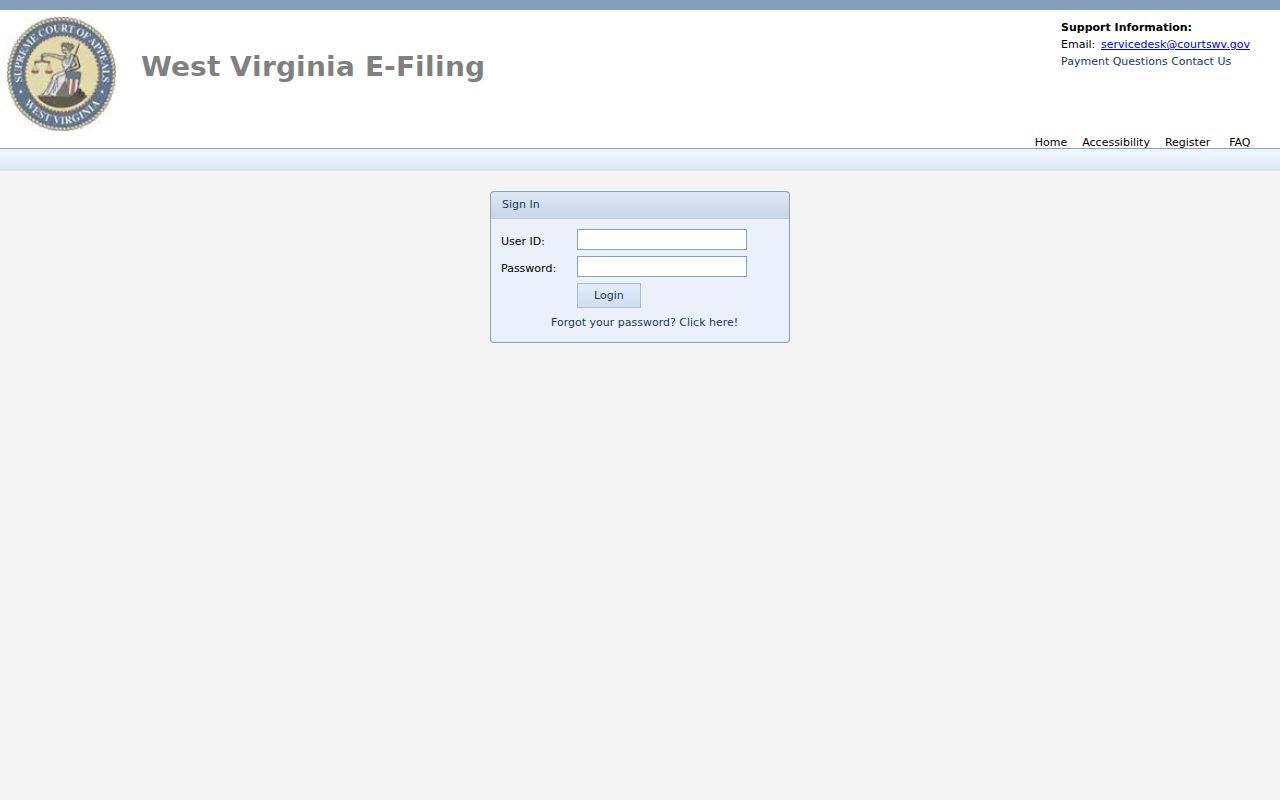
“Processed” only means the court received the filing. Nothing about a ruling. It does not mean the judge granted anything or that the civil case ended. Other labels in the system include Receipt, Clerk Review, Rejected, Payment, Judge Review, and Unable to Process. When Filing History shows an item but WVPASS does not, check its status, confirm the case number, and contact the Circuit Clerk. A processing lag and a legal access limit are different issues, and knowing which one you face saves a wasted call.
Key distinction: Filing History tracks an e-file submission for authorized users. WVPASS is the public Circuit document route.
Civil Case Types on the Docket
Circuit civil work in Ohio County spans general civil claims, adoptions, guardianships, mental-health matters, magistrate appeals, and other civil categories. The category helps route a search. It does not settle what is public. Adoption, guardianship, mental-health, and domestic-relations material can carry limits that never touch a routine general civil filing.
Magistrate civil records cover small claims and other disputes within that court’s authority. A Magistrate Record Search result may locate the case. The Ohio County Magistrate Clerk supplies the actual documents. A Circuit appeal from Magistrate Court can open a later Circuit docket. One dispute can leave entries at two court levels.
- Complaint, petition, and summons events
- Answers, counterclaims, and motions
- Hearing, trial, and continuance settings
- Orders, judgments, and appeals
- Execution, garnishment, and satisfaction events
Ohio County Civil Filing Context
The 2024 Judiciary annual report lists 456 Ohio County Circuit civil matters. General civil made up 261 of them. Other civil accounted for 102, mental health for 55, adoption for 25, guardianship for nine, and magistrate appeals for four. These are reporting groups. They are not a live case list or a count of outcomes.
The 2025 component row calculates to 551. Treat any trend comparison with care unless the final formatting and definitions match. Annual figures say nothing about liability, judgment, or present status in a named matter, so the Ohio County civil docket remains the real answer for a case.
Note: Court statistics count reported case categories, not unique people, final outcomes, or the number of matters open today.
Civil Docket Settings and Hearings
Look closely at the label on a civil setting. It might be a status conference, a motion hearing, mediation, a pretrial conference, a bench trial, or a jury trial. That label tells you what the hearing actually is. A motion hearing is not the trial. A continuance is not a dismissal. When a new date replaces an old one, the later docket lines in the Ohio County civil docket will show it. So trace the entries in order before you assume anything changed or ended.
WVPASS sends no alerts and posts no general daily calendar for Ohio County court dockets. The filed notice or order often carries the controlling date. The clerk or court coordinator can confirm a reset. Jot down the court, judge, room, time, and setting type. The Ohio County court dates reference pulls those fields together.
- Setting
- A scheduled court event.
- Continuance
- A court-authorized delay to another date.
- Judgment
- An order deciding some or all issues.
- Satisfaction
- An entry reflecting that a judgment obligation was met or released.
Ohio County Civil Copies
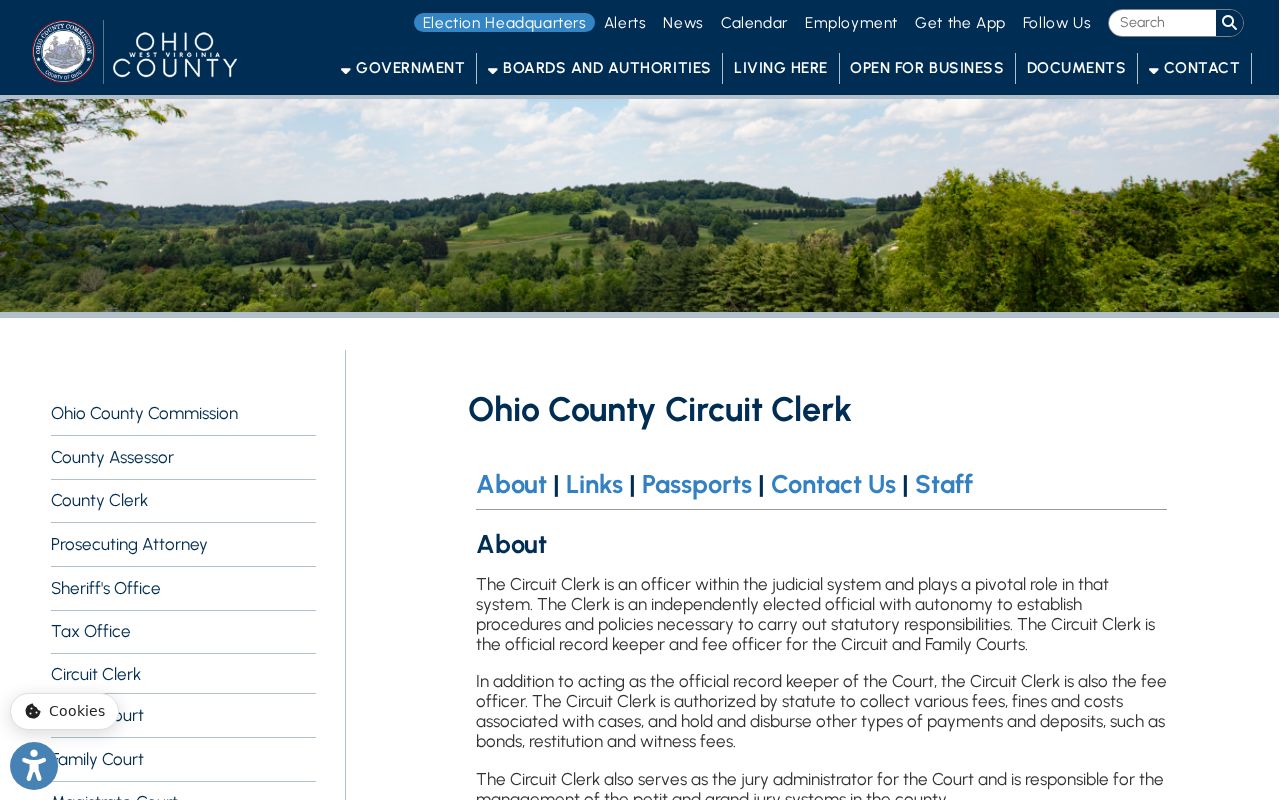
The official Circuit Clerk page lists the front office, the file room, hours, and the routes for Circuit and Family records. It is the place to verify contact details before requesting copies.
For a certified civil document, the file room is your practical route. State law sets the fee at $1 per page. That covers any transcript, copy, or paper made so it can leave the office. Postage or express delivery costs get added on top. Ask the clerk directly about any separate certification fee, request form, email option, dropbox, or mail payment. None of those is standard everywhere. Check before you send money.
When you request copies, have your details ready. Bring the case number, case style, document title and date, plain or certified status, number of copies, delivery choice, and your contact information. These are simply recommended details, not fields on an official Ohio County form. A precise request goes a long way. It helps the right item get pulled from a long civil register.
Civil Docket Access Rules
Two statutes shape what a docket search can actually reach. W. Va. Code §51-4-2 sets the general baseline that court records stay open. But W. Va. Code §48-1-303 draws a sharp line inside domestic-relations files. Orders may be public while pleadings, exhibits, and other filed documents stay confidential. So spotting a Family Court case in the docket does not guarantee access to the full file behind it.
FOIA is the fallback route. A request can be oral or written as long as it describes the existing record with reasonable detail. Under W. Va. Code §29B-1-3, the custodian must respond within five days, excluding weekends and legal holidays, by granting access, proposing an inspection plan, or denying the request in writing. Two limits apply. FOIA cannot override a sealing order. It also never forces the clerk to create a new report that does not already exist.
Access check: A docket entry, filed document, and certified copy are three separate layers. Ask which layer is public and which office holds it.
Note: A public case entry can coexist with a confidential pleading, sealed attachment, or access-limited mental-health or guardianship record.
Ohio County Civil Filing Sequence
Most civil dockets tell the same basic story. A complaint or petition opens the case. Then comes the summons and service, an answer, and motions. A hearing or trial can produce an order and judgment. Post-judgment events such as execution, garnishment, appeal, satisfaction, or dismissal may follow. Not every case hits every step. A settlement can close the dispute without any trial at all.
Docket flow: Complaint › Service › Answer › Motions and Settings › Judgment › Satisfaction or Appeal
Always start with the newest docket entry. A motion only shows that someone asked the court for something, not that the request was granted. A judgment entry should be read alongside its order. An execution is an enforcement step, while a satisfaction records that the judgment obligation was met or released. Learning this sequence is what separates a request, a scheduled event, and an actual court decision.
The filing date carries its own meaning. Per the clerk manual, receipt by the clerk controls filing. A review status can come later. So a received item, a processed e-file, and an entered judicial order mark three distinct points in the Ohio County civil docket.